
Three versions of the same procedure.
One on the server, one printed on the wall, one in an email from 2023. All slightly different.
Superseded copies in use
The version on the shop floor isn’t the version that was approved.
Reviews overdue
Documents with a two-year review cycle that haven’t been touched in four.
No proof of communication
You updated the SOP. Proving the crew saw it is a different question.
How it works
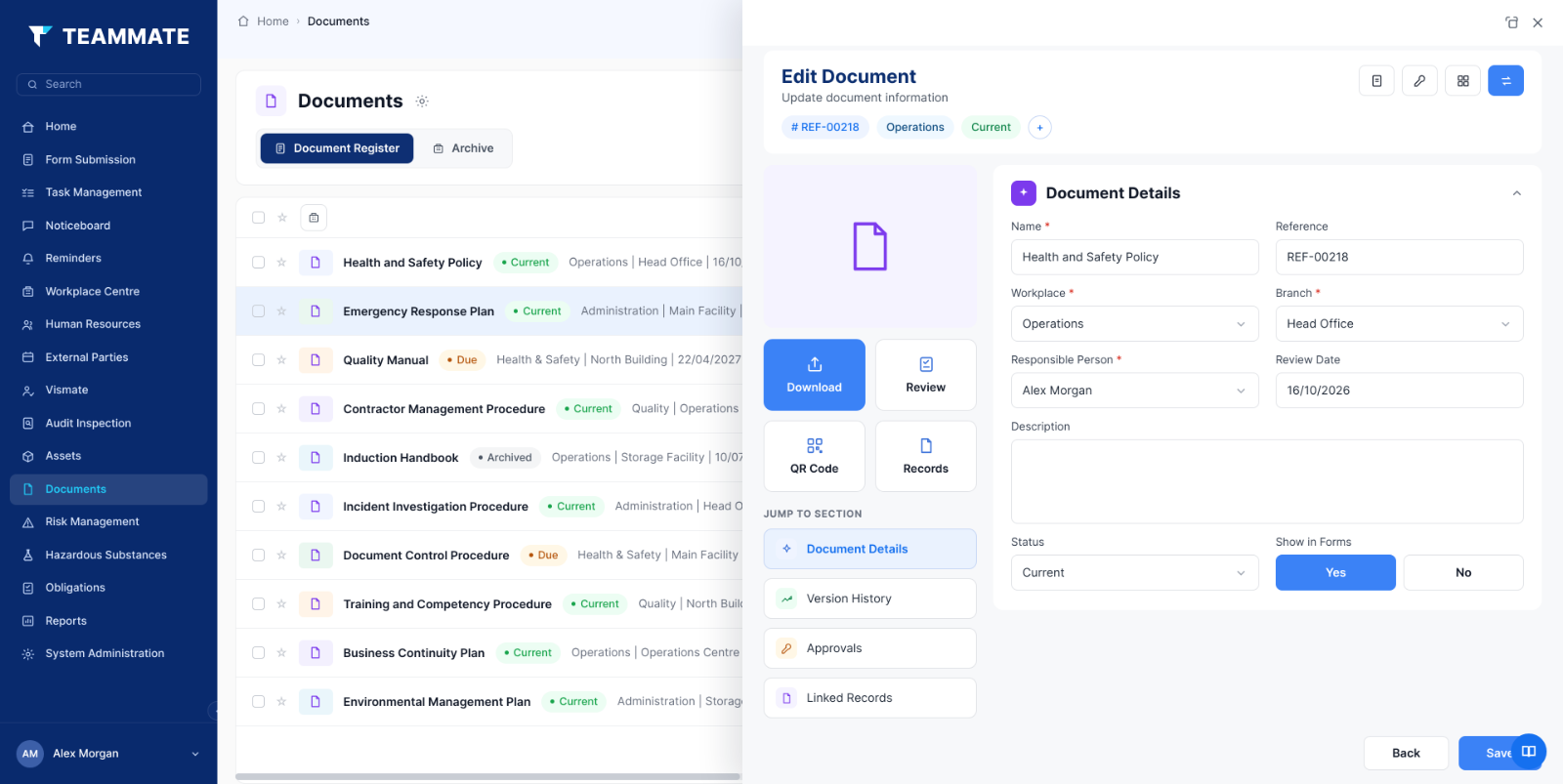
Draft, approve, publish, review.
01
Draft and number it
Document type, owner, review cycle and classification — your register structure.
02
Route for approval
The right people review and sign off before anything goes live.
03
Publish and notify
The new version becomes current. Affected staff are asked to acknowledge it.
04
Review on schedule
The review date raises a task on the owner. Nothing goes stale unnoticed.
The right document, on the job.
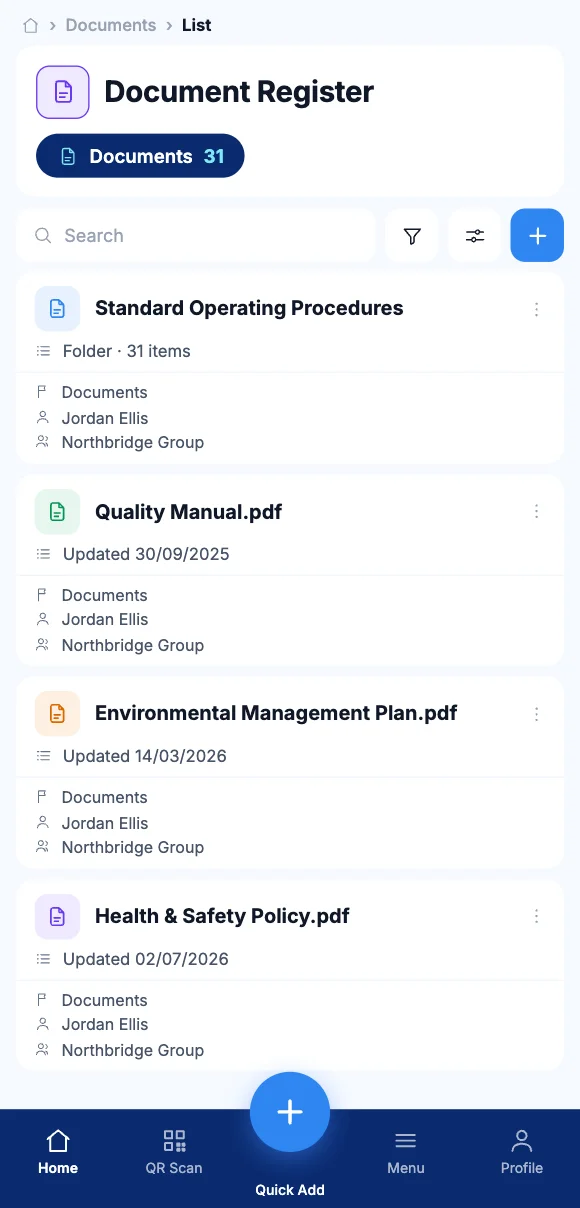
Crews open the current SOP on a phone at the point of work — and can’t accidentally open the superseded one, because it isn’t there.
- Always the current version — Superseded copies are archived, not deleted, for the audit trail.
- Full history — Who changed what, when, and who approved it.
- Linked to controls — The procedure that manages a risk is attached to that risk.
Works with
Documents are evidence for everything else.
A procedure controls a risk, a form comes from a document, and an audit asks for both.