
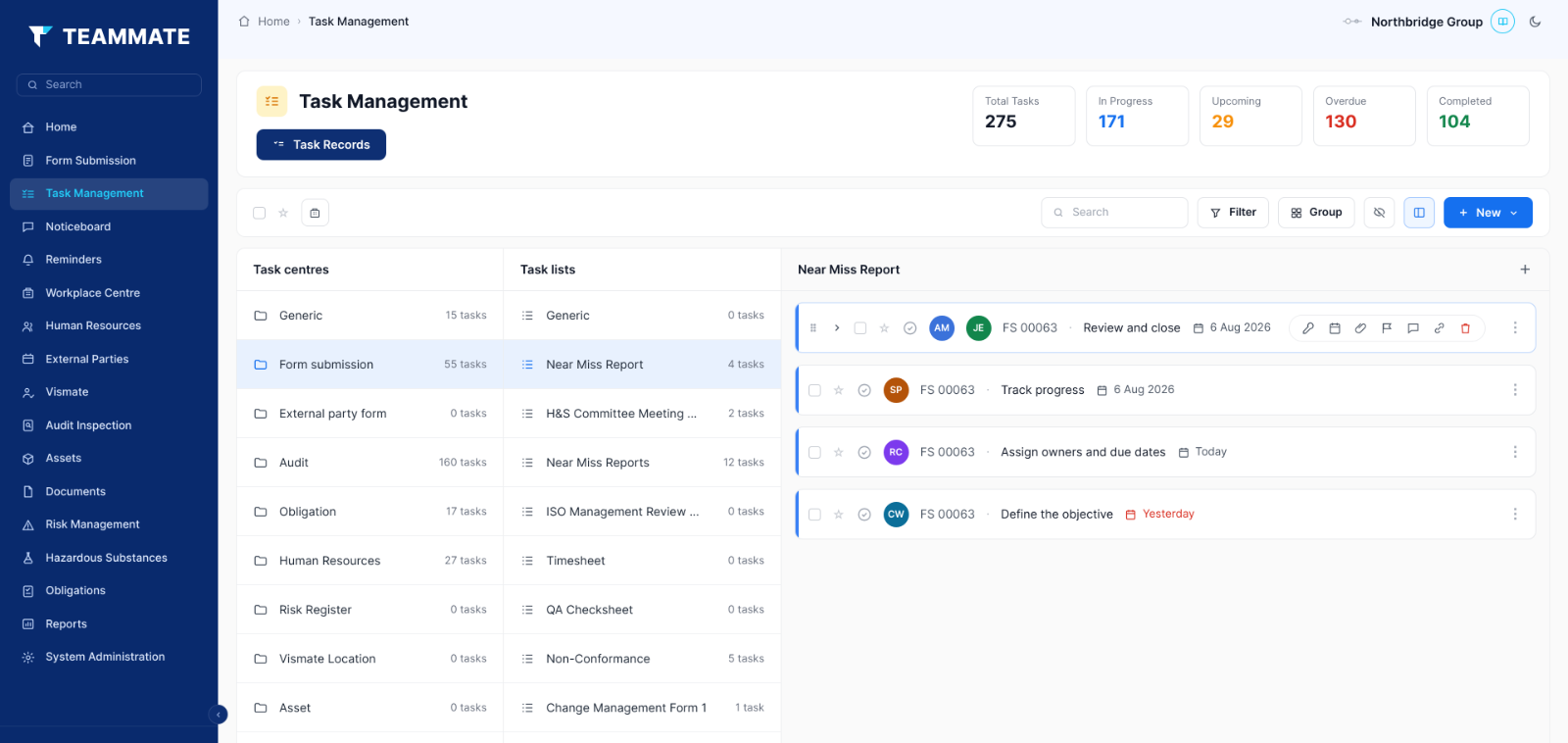
The list exists. It just lives in six places.
Actions come out of meetings, audits, incidents and inspections — then scatter across minutes, inboxes and someone’s notebook.
No single list
Actions live in minutes, emails and three spreadsheets. Nobody sees the whole picture.
Quietly overdue
Due dates pass without anyone knowing until the next audit finds them.
Closed without proof
Marked done in a spreadsheet with nothing to show an auditor.
How it works
Raised, owned, closed — with the trail intact.
01
It raises itself
A failed check, an incident, an audit finding or an overdue obligation creates the task automatically.
02
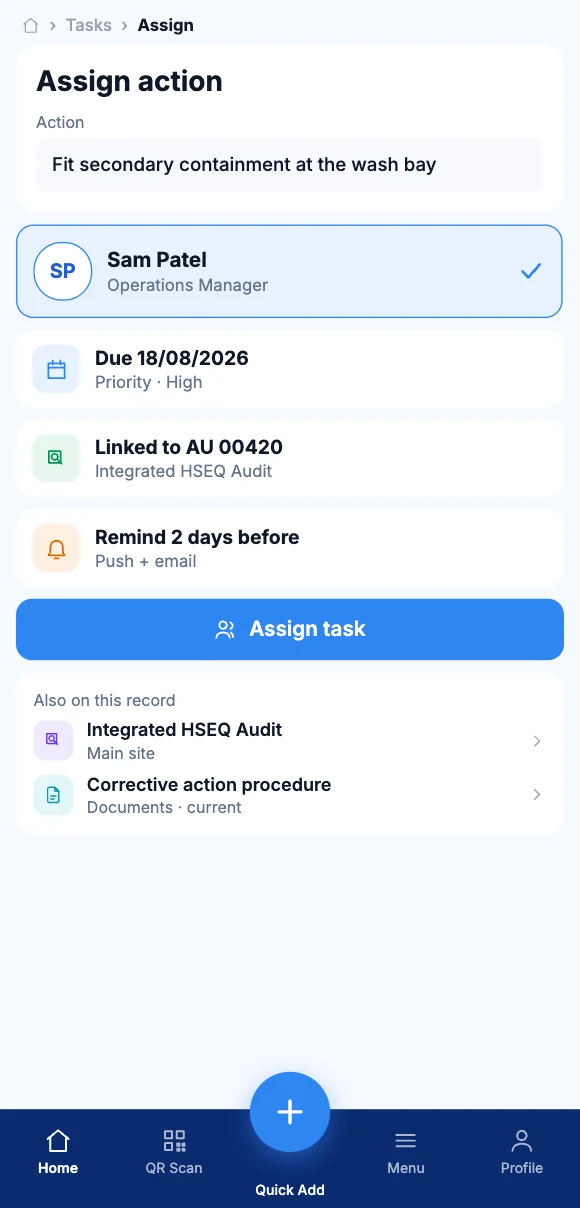
Assign and date it
Pick an owner, set a due date and a priority. They get notified where they actually look.
03
Work it in the app
Comments, photos, documents and sub-tasks — everything about the action stays with the action.
04
Close it with evidence
Attach the proof, sign it off, and the source record updates to show it’s resolved.
Your crew sees their tasks, not everyone’s.
Permissions mean a supervisor sees their site and a worker sees their jobs. No scrolling through four hundred rows to find the two that matter to you.
- One list per person — My actions, sorted by what’s closest to due.
- Push and email reminders — Before it’s due, not after.
- Escalation rules — If it goes overdue, it goes to a manager automatically.
Works with
Where your actions come from.
Tasks are rarely typed in by hand. They arrive from the module that found the problem — and link straight back to it.