
You told them. Prove it.
Most site communication happens by group email, printed sheet or word of mouth — three channels that leave no record of who received what.
Notices die in inboxes
Half your workforce doesn't have a work email, and the half that does isn't reading it on a job site.
No proof it landed
After an incident the first question is who was told. A sent folder is not an answer an investigator accepts.
Everyone gets everything
Blast the whole company for a one-site issue and people stop reading anything you send.
How it works
Post once. Chase only the gaps.
01
Write the notice
Title, message, and any document or photo that goes with it. Set it to expire or pin it until it's read.
02
Choose who sees it
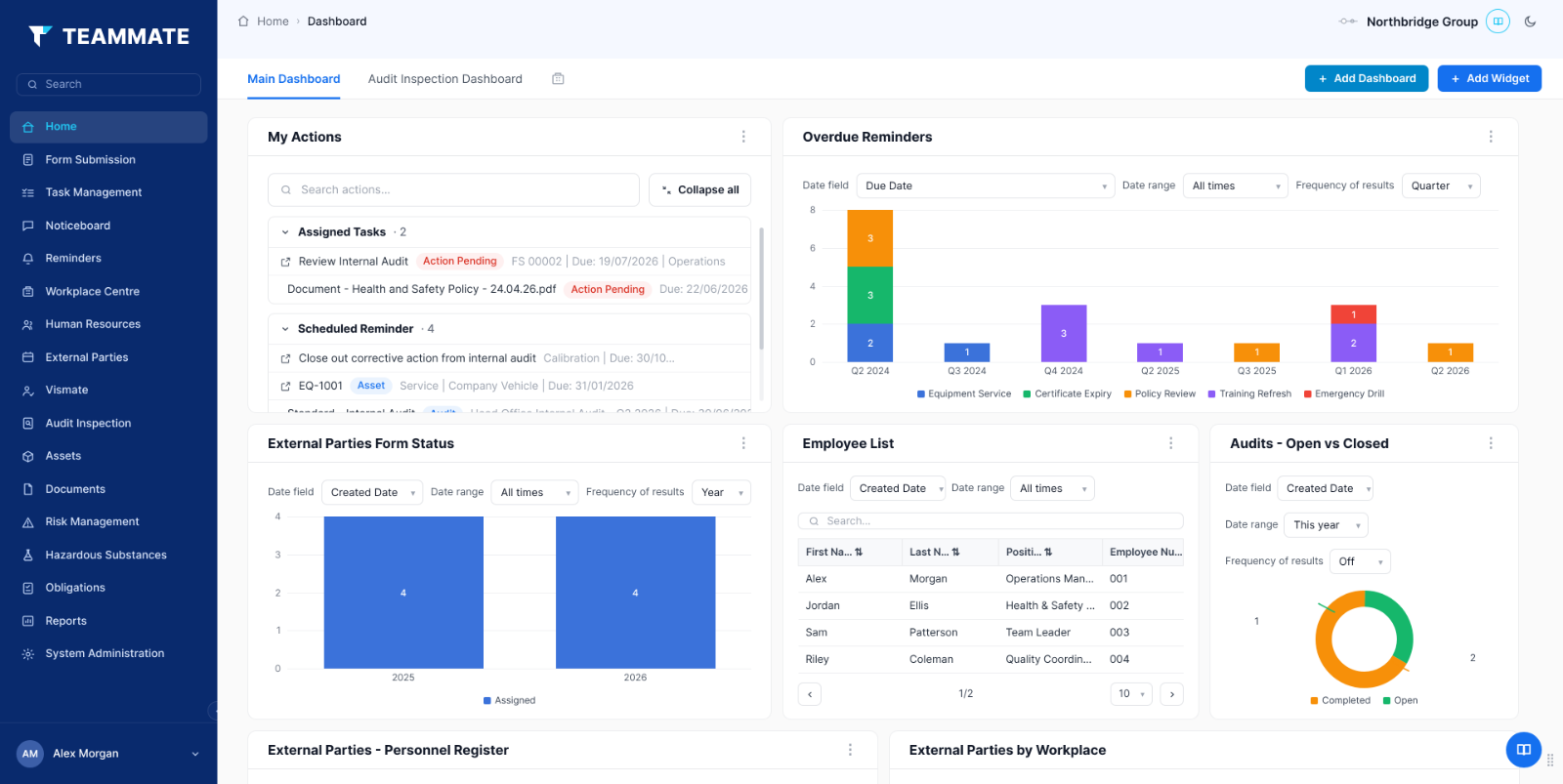
Everyone, one site, one team, or a role — drawn from the same people register the rest of the system uses.
03
It lands where they look
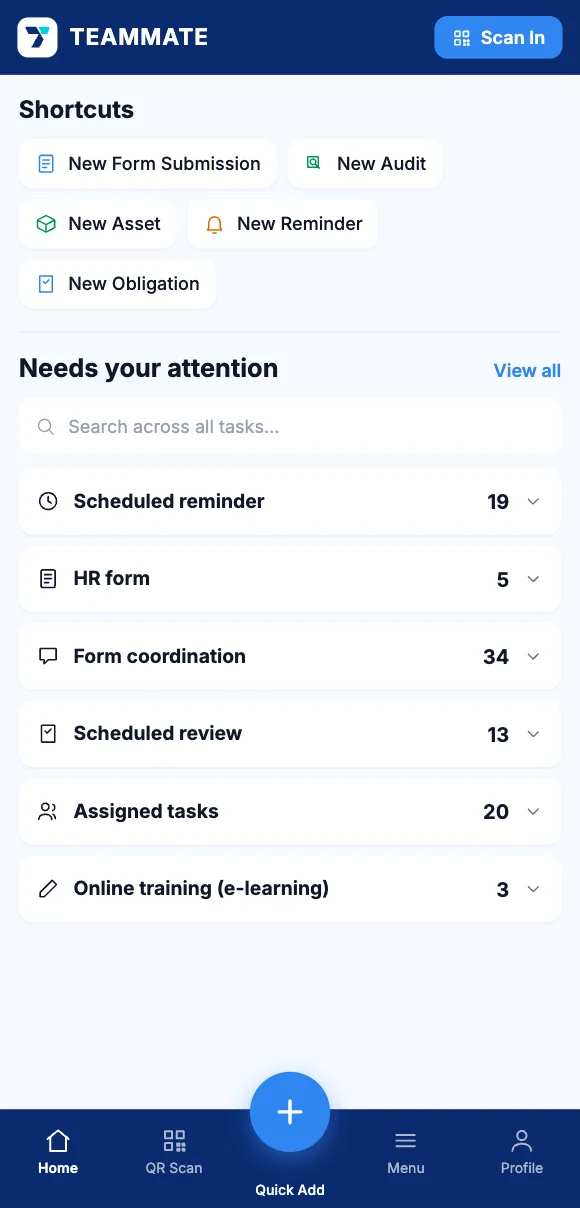
Top of the mobile app, with a push notification. No login hunt, no forwarded email chain.
04
See who hasn't
A live list of who has read and who hasn't. Nudge the stragglers instead of re-sending to all 228 people.
Communication that survives an audit.
Consultation and communication are clauses in every management standard, and they're the ones organisations struggle to evidence. A read log with names and timestamps ends that argument.
- Timestamped read log — who opened it, from where, and when.
- Acknowledgement step — require a tap to confirm they've understood, not just opened.
- Permanent archive — every past notice stays searchable with its distribution list attached.
Works with
The people it goes to are already in the system.
No separate distribution lists to maintain. Notices draw on the same registers, sites and roles as everything else.