
The SDS folder is out of date. It always is.
Suppliers reformulate, sheets expire on a five-year cycle, and the folder on the wall hasn’t been opened since it was printed.
Expired data sheets
SDSs older than five years are not compliant, and nobody’s tracking the dates.
Nobody knows the quantities
Location thresholds and placarding rules depend on volumes you can’t produce.
Controls not linked
The register lists the chemical but not the PPE, storage or training it requires.
How it works
Register, classify, control, review.
01
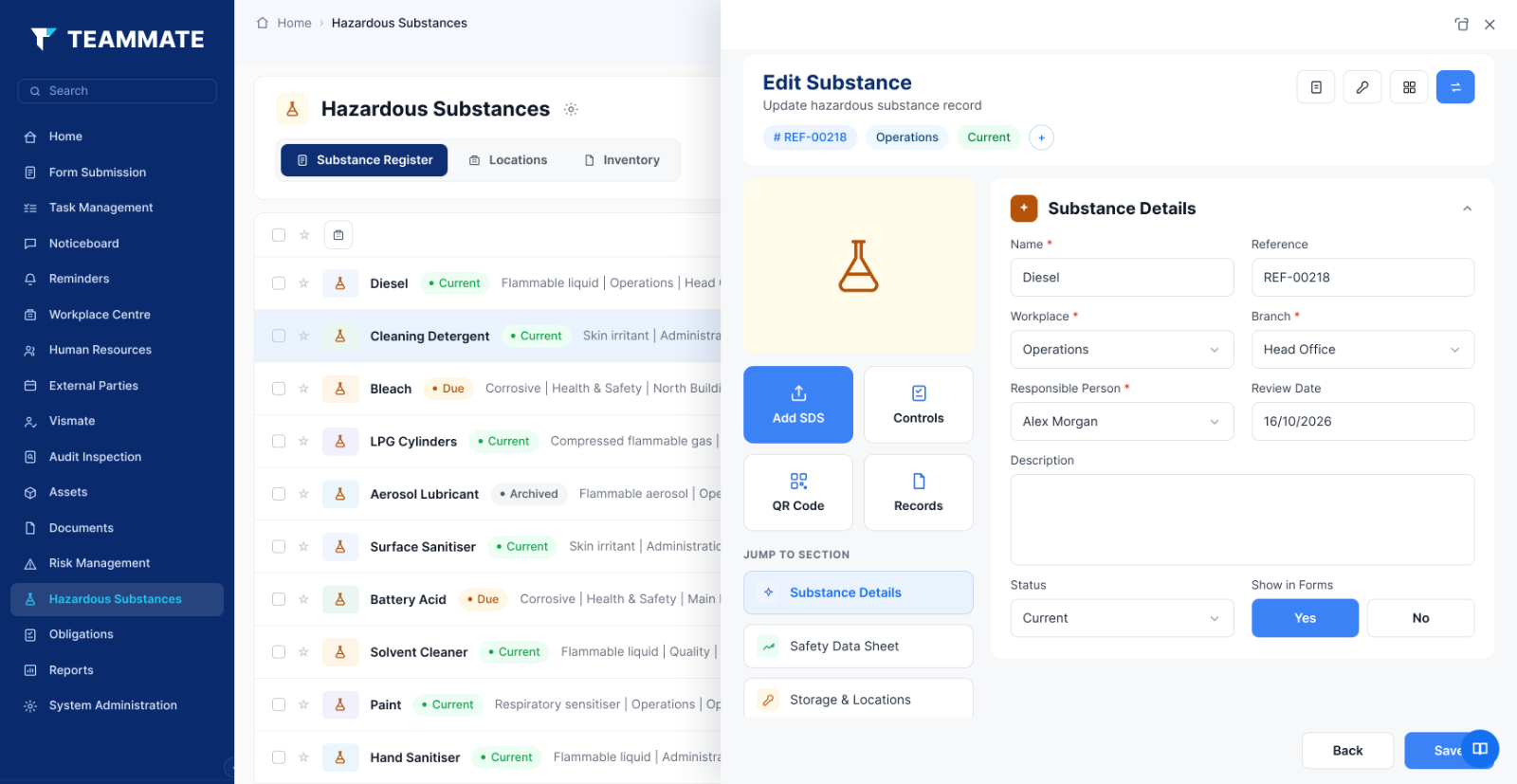
Add the substance
Name, supplier, classification and the hazard pictograms that apply.
02
Attach the SDS
Upload the current sheet and set its review date. Renewals raise tasks.
03
Record locations and volumes
Track quantities per site or store so thresholds are always answerable.
04
Link the controls
PPE, storage requirements, spill procedure and who’s trained to handle it.
The sheet, at the point of use.
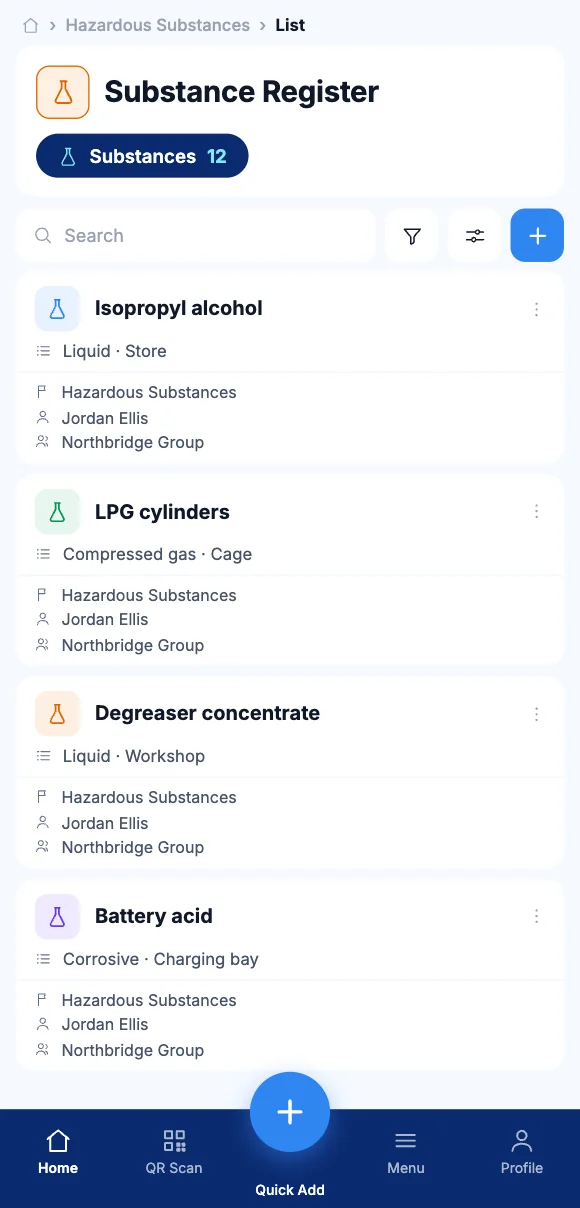
A worker at the store scans or searches and has the current SDS on screen in seconds — including the first-aid section, which is the part that matters when it matters.
- Searchable on mobile — By name, supplier or location, with or without signal.
- Pictograms and classifications — Visible on the record, not buried in a PDF.
- Linked to the risk register — The substance and its controls sit alongside the risk they create.
Works with
Substances don’t sit on their own.
They create risks, require training, live in locations and get inspected. All of that connects.