
Scope from the work, not the feature list
Nearly every stalled evaluation begins the same way: someone builds a requirements spreadsheet with two hundred rows, sends it to six vendors, and receives six spreadsheets in which every row says yes. The grid cannot separate the vendors because it was never designed to. It asks whether a capability exists, and almost all of them exist somewhere in almost every product.
Start from three real events instead. Take an audit finding raised last quarter, an incident that required investigation, and a contractor who arrived on site with an expired ticket. Write down exactly what happened to each one — who recorded it, where it went, who chased it, what it turned into, how long it took, and where the evidence ended up when it was done.
Those three narratives are your requirements. They are specific enough that a vendor cannot answer yes, and they cover the parts of the job that actually consume your week: the chasing, the re-keying, and the reconstruction of the trail six months later. A demo that handles all three convincingly has told you more than a two-hundred-row grid ever will.
The test
If two vendors would answer a requirement identically, it is not a requirement — it is a description of the category. Cut it.
The five questions
These five separate systems that were built for this work from systems that were configured to look like they were. Ask them in the first demo, not the third.
- 1.What happens when a finding becomes a task? Ask them to do it live. If it involves copying a description into a second module, every finding you raise will cost you that copy, forever.
- 2.Who chases the overdue action, and how? Escalation is where compliance systems earn their keep. If the answer is a weekly report that a person reads and then emails people about, you have bought a database, not a system.
- 3.What does a field worker see on a phone with no signal? Ask for the offline behaviour specifically. Half of the industry means "the website is responsive."
- 4.Can we change a form ourselves? Your processes will change more often than your vendor's release cycle. If every form change is a support ticket, budget for the delay and the fee.
- 5.How do we get our data out? Ask before you sign, in writing, in a named format. The answer tells you how the relationship will feel in year three.
Six weeks, end to end
The schedule matters more than the rigour. An evaluation with a fixed end date makes decisions; one without a date collects information indefinitely. Six weeks is enough for a mid-sized organisation to do this properly.
- Week 1Write the three narratives. One page each. Circulate to the people who lived them and correct the parts you got wrong.
- Week 2Shortlist to four. Send the narratives, not a grid. Ask each vendor to demo those events specifically.
- Week 3Demos, with your people in the room. The person who will use it daily gets a veto. They will spot in ten minutes what a committee misses in a month.
- Week 4–5Trial the final two with real data. Not sample data. One site, one month of genuine records, the people who will own it.
- Week 6Decide. Total cost of ownership over three years, the trial team's verdict, and the exit answer in writing. Then sign.
What to actually test in a trial
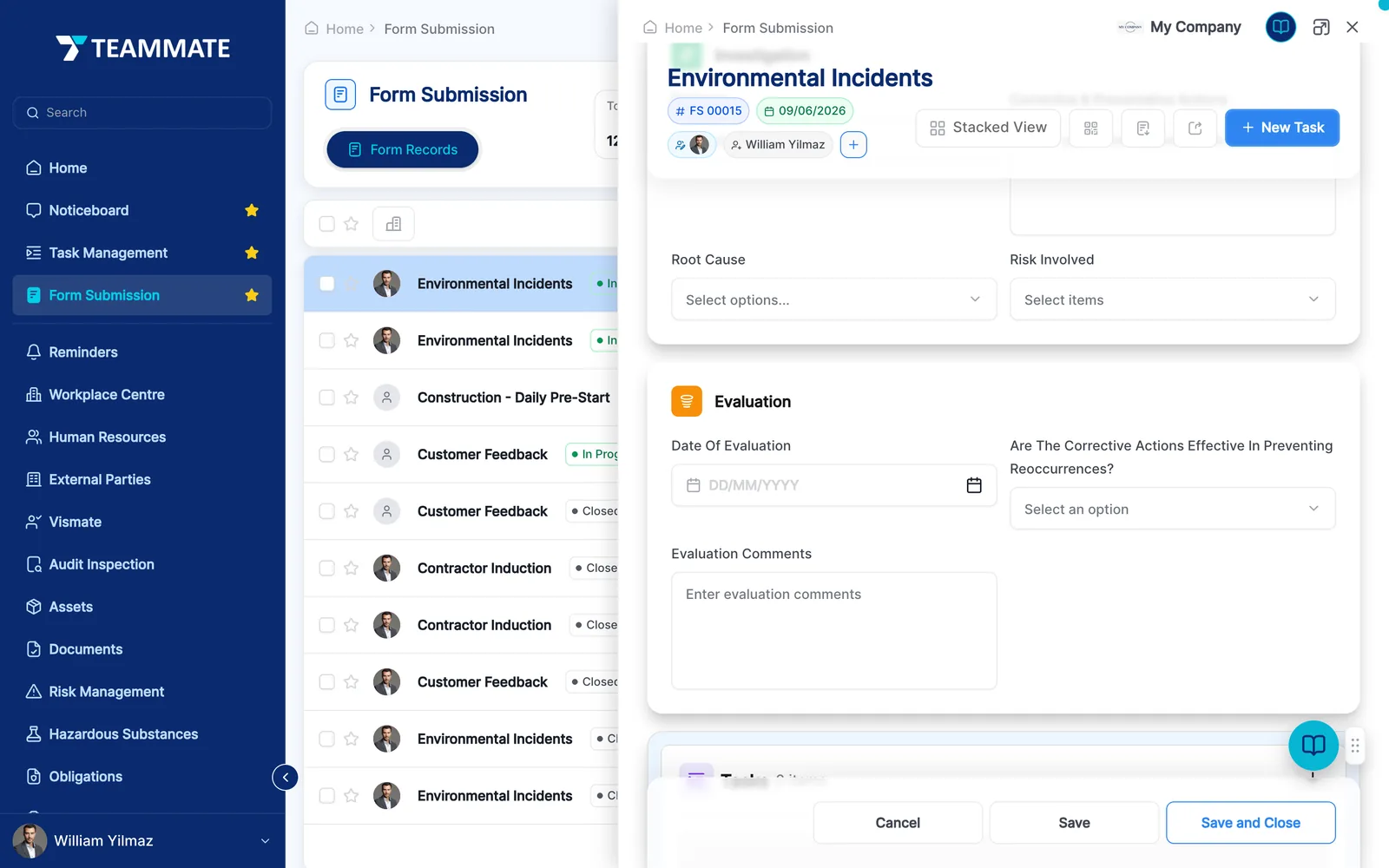
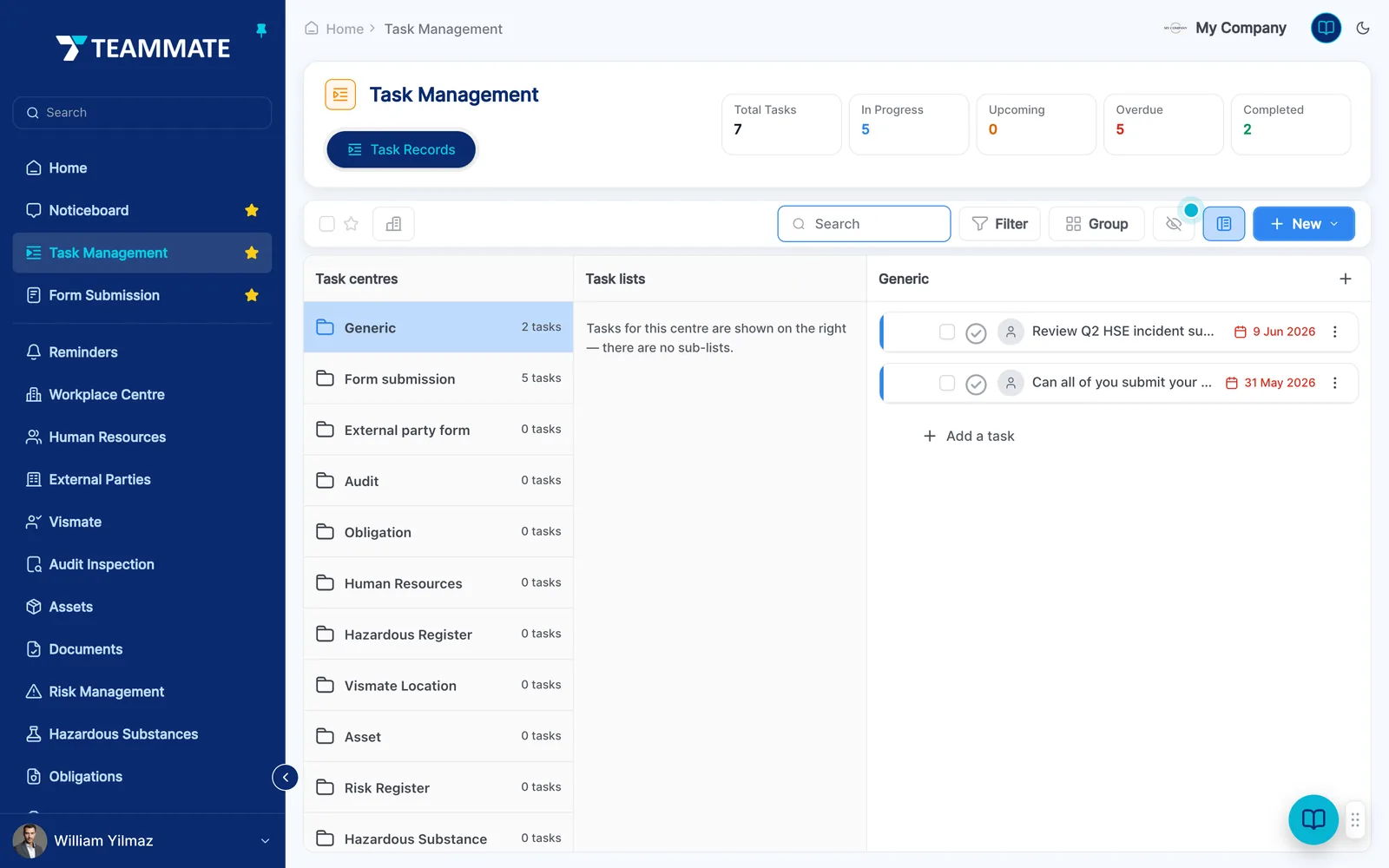
Trials get wasted on exploration. People log in, click through the modules, agree it looks good, and learn nothing that survives contact with production. Run one real event through instead, all the way, and watch where it snags.
- Raise a genuine finding from your last audit, with the wording you actually used.
- Assign it to someone who does not work in your team, and let them receive it however they normally would.
- Let it go overdue on purpose. Watch what the system does without a human noticing.
- Close it with evidence attached from a phone, in the field, on mobile data.
- Export the whole record as you would hand it to an auditor, and read what comes out.
The cost that is not on the quote
The licence is the number everybody compares and rarely the number that decides whether the project succeeds. Ask every vendor to price all five lines below, for year one and for years two and three, and compare those totals instead.
- Licences — including the occasional users. Systems priced per named user get expensive the moment you want everyone reporting hazards.
- Configuration — the forms, workflows and registers built to match your processes, and who does that work.
- Migration — how much history moves across, in what shape, and what happens to the rest.
- Training — for the administrator who will own it and for everyone who will only ever fill in a form.
- Your own time — the largest hidden line, and the one nobody budgets. Estimate it honestly and add it to both quotes.
Four ways these projects fail
Failure is rarely the software. It is almost always one of these four, and all four are visible before you sign if you know to look.
- 1.Nobody owns it. A system without a named administrator with time allocated will drift within two quarters. Name the person during the evaluation, not after.
- 2.Everything at once. Fifteen modules on day one guarantees fifteen half-configured modules. Start with the two processes that hurt most and earn the rest.
- 3.The paper process, digitised. If you rebuild a bad form as a good screen, you have a faster bad form. Fix the process first, then configure it.
- 4.Adoption assumed. The field team decides whether this works. If they were not in the trial, they will not be in the system.
Questions we get asked
How long should choosing HSEQ software take?
Six to eight weeks from scoping to signature is realistic for a mid-sized organisation. Evaluations that run past three months usually stall because nobody owns the decision or because the scope keeps growing — not because the software is hard to assess.
Should we buy one platform or best-of-breed tools?
It depends on whether your findings cross module boundaries. If an audit finding becomes a task, a corrective action and a document change, separate tools force people to re-key the same event three times and the trail breaks at every handoff. If your processes genuinely sit in silos, best-of-breed is defensible.
What does HSEQ software usually cost?
Licence pricing is normally per user per month, but the licence is rarely the largest number in year one. Configuration, migration, integration, training and internal time typically add between half and twice the first-year licence cost. Ask every vendor to quote all five.
Do we need a system to get ISO certified?
No. Certification requires documented information and evidence that your processes run as described, and a well-kept set of spreadsheets can satisfy that. Software becomes worth it when the cost of finding evidence, chasing overdue actions and rebuilding the trail before each audit exceeds the cost of the licence.
How do we test a system properly in a trial?
Run one real end-to-end event through it rather than exploring features. Raise a genuine finding, assign it, let it go overdue, escalate it, close it with evidence and then export the record. Whatever breaks in that sequence will break the same way in production.
Written by the Teammate App team from evaluations we have taken part in, on both sides of the table. General guidance only — your procurement rules, sector regulator and certification body take precedence.